MIND

The Social Construction of Stories

How Narratives Can Get in the Way of Being Happier
Paul Dolan
[5.13.16]


I went for dinner with a friend who spent the whole of the evening complaining about her job, her boss, her colleagues, and her commute. Everything about her day-to-day experiences was miserable. Then, at the end of dinner, she said, "I love where I work." That's quite common. She was working for an organization where she'd always wanted to work, her parents were proud, her friends were jealous. How could she not be happy when she thought about the story of how happy she was where she was working? Her experiences—day-to-day and moment-to-moment—were telling her something quite different.

I'm interested in where these narratives come from, particularly those narratives that sometimes get in the way of us being happier. There's been a lot of psychological research on how stories are helpful for us; for example, in the case of experiencing adversity or trauma. If we look for explanation and reason through narrative, it helps us cope with the adverse consequences. There's been a lot of work on that. I'm interested more in the social constructions of the stories, in the things that evolution, society, our parents, or historical accident tell us about the lives that we ought to be leading, and in particular, how they might sometimes get in the way of us experiencing better lives.

PAUL DOLAN is a professor of behavioral science at the London School of Economics and Political Science and author of Happiness by Design. Paul Dolan's Edge Bio Page

THE REALITY CLUB: Elaine Pagels

A Characteristic Difference

Topic: 

  • MIND
https://vimeo.com/158255382

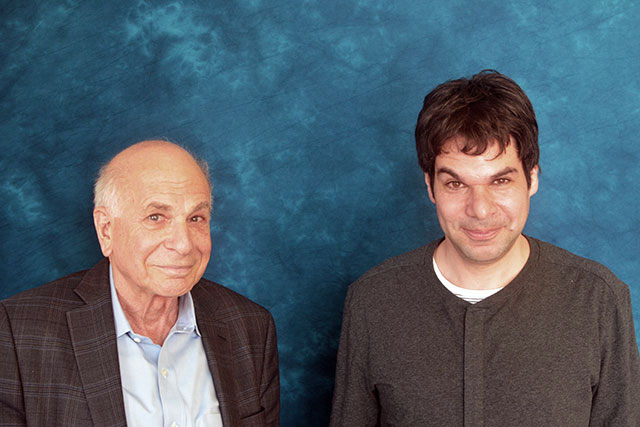
DANIEL KAHNEMAN:  We're at the nub of the question. You come from philosophy, so there are certain things that are of interest to you. You want to convey two things at once: that the question is exciting, and that you have something new to say about it. It is true that I, as a psychologist, would come to the same question and conclude that it's an impossible question. Those are two impossible questions, and I certainly would not expect people to answer them in any way that is coherent.                                  

A Characteristic Difference

Topic: 

  • MIND

Daniel Kahneman and Joshua Knobe from Edge Foundation on Vimeo.

KAHNEMAN:  We're at the nub of the question. You come from philosophy, so there are certain things that are of interest to you. You want to convey two things at once: that the question is exciting, and that you have something new to say about it. It is true that I, as a psychologist, would come to the same question and conclude that it's an impossible question. Those are two impossible questions, and I certainly would not expect people to answer them in any way that is coherent.                                  

A Characteristic Difference

When Experimental Philosophy Meets Psychology
Joshua Knobe, Daniel Kahneman
[4.26.16]

DANIEL KAHNEMAN:  We're at the nub of the question. You come from philosophy, so there are certain things that are of interest to you. You want to convey two things at once: that the question is exciting, and that you have something new to say about it. It is true that I, as a psychologist, would come to the same question and conclude that it's an impossible question. Those are two impossible questions, and I certainly would not expect people to answer them in any way that is coherent.                                  

My first assumption, coming to it as a psychologist, is that there is no coherence. You agree with me that there is no coherence. What makes it exciting from the point of view of philosophy is that there is no coherence. Whereas, as a psychologist, I take it for granted that there is no coherence, so it's less exciting. That could be one of the differences.               

JOSHUA KNOBE:  That's really helpful. The thing we showed is not just that it is incoherent but along which dimension it is incoherent. It seems like there was evidence already that there's something pulling us towards one side and something pulling us to the other side, and we want to know which thing is pulling us towards one side or the other. We suggested that it's this difference between abstract thinking and concrete thinking.... 

JOSHUA KNOBE is an experimental philosopher and professor of philosophy and cognitive science at Yale University. Joshua Knobe's Edge Bio Page

DANIEL KAHNEMAN is the recipient of the Nobel Prize in Economics (2002), and the Presidential Medal of Freedom (2013). He is the Eugene Higgins Professor of Psychology Emeritus, Princeton, and author of Thinking Fast and Slow. Daniel Kahneman's Edge Bio Page

Verena Huber-Dyson

May 6, 1923—March 12, 2016
John Brockman
[3.13.16]

In 1997, my son George Dyson handed me a batch of comments dated Oct. 29, 1998—Edge #29 ("What Are Numbers, Really? A Cerebral Basis For Number Sense"), by Stanislas Dehaene and Nov. 7—Edge #30 (the subsequent Reality Club discussion) by a group of Edge researchers. I read it all with great interest, and then my head started spinning.

Anyone interested in the psychology (or even psycho-pathology) of mathematical activity could have had fun watching me these last weeks. And now here I am with an octopus of inconclusive ramblings on the Foundations bulging my in "essays" file and a proliferation of hieroglyphs in the one entitled "doodles." It is so much easier to do mathematics than to philosophize about it. My group theoretic musings, the doodles, have been a refuge all my life.

VERENA HUBER-DYSON, mathematician and logician, died yesterday in Bellingham, Washington, at the age of 92. She was Emeritus Professor of the Philosophy Department, University of Calgary, Alberta. 

Born in Naples and raised in Athens until 1940, she joined the Institute for Advanced Study as a visiting member of the School of Mathematics in 1948 after obtaining her PhD from the University of Zürich with a thesis in finite group theory under Andreas Speiser in 1947. After teaching positions at Cornell University, Goucher College, San Jose State University, Adelphi University, UCLA, Mills College, and UC Berkeley (where she was a member of Tarski's Group in Logic and the Methodology of Science), she obtained tenure as an associate professor in the Mathematics department of the University of Illinois.  

From 1973 to 1988, she was a professor in the Philosophy department of the University of Calgary, Alberta Canada, where she taught graduate courses on the Foundations of Mathematics and the Philosophy and Methodology of the sciences. Her research, on the interface between Algebra and Logic, (Tarski and Novosibirsk Style) is concerned with undecidability in Group theory.

She is the author of a monograph, Gödel's theorems: a workbook on formalization (Teubner, 1991) based on her experience of teaching graduate courses and seminars on mathematical logic, formalization and its limitations to mathematics, philosophy and interdisciplinary students at the Universities of Calgary, Zürich and Monash. Verena Huber-Dyson's Edge Bio page

VHD on Edge:

GÖDEL IN A NUTSHELL
By Verena Huber-Dyson [ 5.13.06 ]

The essence of Gödel's incompleteness theorem is that you cannot have both completeness and consistency. A bold anthropomorphic conclusion is that there are three types of people; those that must have answers to everything; those that panic in the face of inconsistencies; and those that plod along taking the gaps of incompleteness as well as the clashes of inconsistencies in stride if they notice them at all, or else they succumb to the tragedy of the human condition. (Continue...)

GÖDEL AND THE NATURE OF MATHEMATICAL TRUTH II
A Talk with Verena Huber-Dyson [ 7.26.05 ]                   

KM MacAir HD:Users:khm:Dropbox:VHD:vhd300.jpg
[self-portrait, 1954]

I doubt that pure philosophical discourse can get us anywhere. Maybe phenomenological narrative backed by psychological and anthropological investigations can shed some light on the nature of Mathematical Truth.

As to Beauty in mathematics and the sciences, here speaks Sophocles' eyewitness in Antigone:

"... Why should I make it soft for you with tales to prove myself a liar? Truth is Right." (Continue...)

VERENA'S LAW (The 2004 Edge Annual Question)
Verena's Law of Sane Reasoning

Hone your Hunches, Jump, then backtrack to blaze a reliable trail to your Conclusion. But avoid reductions; they lead to mere counterfeits of truth. (Continue...)

ON THE NATURE OF MATHEMATICAL CONCEPTS: WHY AND HOW DO MATHEMATICIANS JUMP TO CONCLUSIONS?
By Verena Huber-Dyson [ 2.15.98 ]

It is so much easier to do mathematics than to philosophize about it. (Continue...)
../../../../../../../Dropbox/BI-Files/VHD
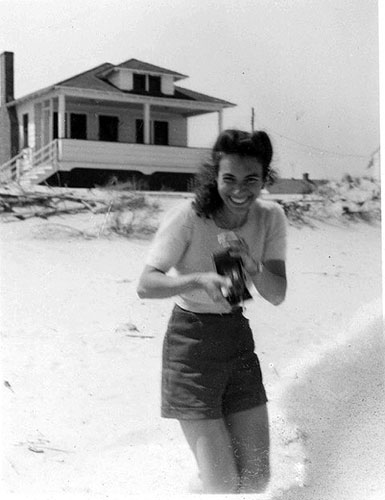
Verena Huber-Dyson—New Jersey, 1949

 

The Crusade Against Multiple Regression Analysis

Topic: 

  • MIND
https://vimeo.com/148280165

A huge range of science projects are done with these multiple regression things. The results are often somewhere between meaningless and quite damaging. ...                             

I hope that in the future, if I’m successful in communicating with people about this, that there’ll be a kind of upfront warning in New York Times articles: These data are based on multiple regression analysis. This would be a sign that you probably shouldn’t read the article because you’re quite likely to get non-information or misinformation.

The Crusade Against Multiple Regression Analysis

Richard Nisbett
[1.21.16]

A huge range of science projects are done with multiple regression analysis. The results are often somewhere between meaningless and quite damaging. ...                             

I hope that in the future, if I’m successful in communicating with people about this, that there’ll be a kind of upfront warning in New York Times articles: These data are based on multiple regression analysis. This would be a sign that you probably shouldn’t read the article because you’re quite likely to get non-information or misinformation.

RICHARD NISBETT is a professor of psychology and co-director of the Culture and Cognition Program at the University of Michigan. He is the author of Mindware: Tools for Smart Thinking; and The Geography of Thought. Richard Nisbett's Edge Bio Page


THE CRUSADE AGAINST MULTIPLE REGRESSION ANALYSIS

The thing I’m most interested in right now has become a kind of crusade against correlational statistical analysis—in particular, what’s called multiple regression analysis. Say you want to find out whether taking Vitamin E is associated with lower prostate cancer risk. You look at the correlational evidence and indeed it turns out that men who take Vitamin E have lower risk for prostate cancer. Then someone says, "Well, let’s see if we do the actual experiment, what happens." And what happens when you do the experiment is that Vitamin E contributes to the likelihood of prostate cancer. How could there be differences? These happen a lot. The correlational—the observational—evidence tells you one thing, the experimental evidence tells you something completely different.

L.A. Paul: "The Transformative Experience"

HeadCon '14
L.A. Paul
[11.18.14]

We're going to pretend that modern-day vampires don't drink the blood of humans; they're vegetarian vampires, which means they only drink the blood of humanely farmed animals. You have a one-time-only chance to become a modern-day vampire. You think, "This is a pretty amazing opportunity, do I want to gain immortality, amazing speed, strength, and power? But do I want to become undead, become an immortal monster and have to drink blood? It's a tough call." Then you go around asking people for their advice and you discover that all of your friends and family members have already become vampires. They tell you, "It is amazing. It is the best thing ever. It's absolutely fabulous. It's incredible. You get these new sensory capacities. You should definitely become a vampire." Then you say, "Can you tell me a little more about it?" And they say, "You have to become a vampire to know what it's like. You can't, as a mere human, understand what it's like to become a vampire just by hearing me talk about it. Until you're a vampire, you're just not going to know what it's going to be like."


[48:42 minutes]

L.A. PAUL is Professor of Philosophy at the University of North Carolina at Chapel Hill, and Professorial Fellow in the Arché Research Centre at the University of St. Andrews. L.A. Paul's Edge Bio page


THE TRANSFORMATIVE EXPERIENCE

My name is Laurie Paul, and I'm a professor of philosophy at the University of North Carolina at Chapel Hill. I'm a metaphysician. I'm especially interested in metaphysics and philosophy of mind. I have been developing what I think of as formal phenomenology. In other words, I'm especially interested in looking at formal techniques engaging with the nature of experience, and I've paid special attention to temporal experience. One thing I've been thinking a lot about lately is the notion of transformative experience, which I'll tell you a little bit about today.

The questions that have been occupying me involve questions that come up when we as individuals think about making big life decisions. Metaphorically, it's when we think about making decisions when we're at life's crossroads. As we live our lives, all of us experience a series of these crossroad-style big decisions.

Pages

Subscribe to RSS - MIND