
Tribute
Coalitional Instincts
John Tooby (1952-2023)
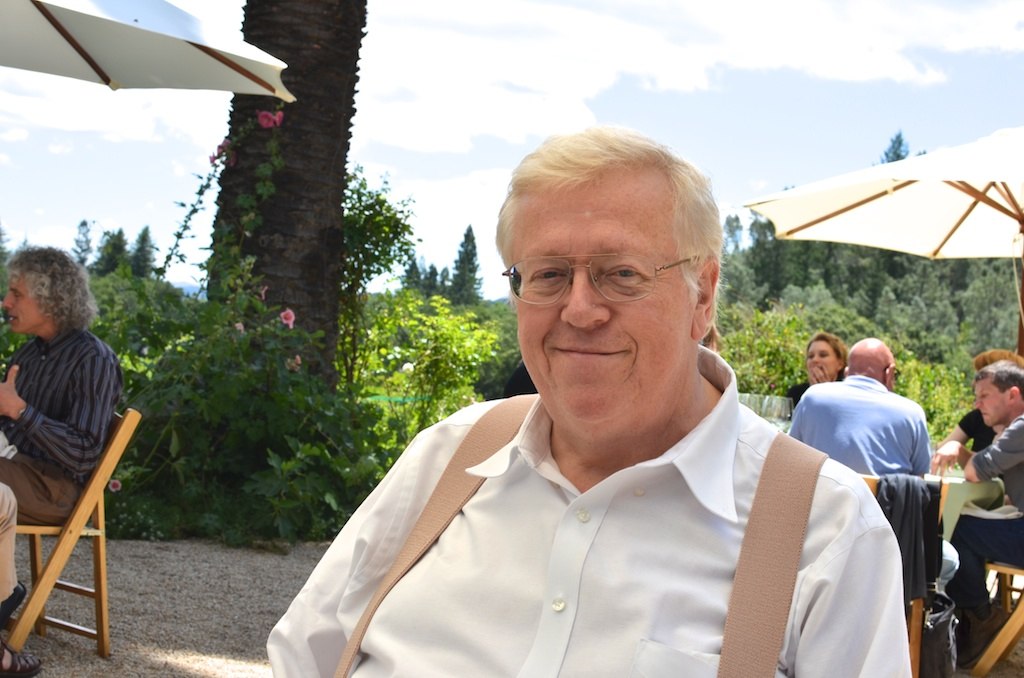

JOHN TOOBY (July 26, 1952-November 9, 2023) was the founder of the field of Evolutionary Psychology, co-director (with his wife, Leda Cosmides) of the Center for Evolutionary Psychology, and professor of anthropology at UC Santa Barbara. He received his PhD in biological anthropology from Harvard University in 1989 and was professor of anthropology at the University of California, Santa Barbara. Tooby and Cosmides also co-founded and co-directed the UCSB Center for Evolutionary Psychology and jointly received the 2020 Jean Nicod Prize.
Tooby was known for his work with his collaborators to integrate cognitive science, cultural anthropology, evolutionary biology, paleoanthropology, cognitive neuroscience, and hunter-gatherer studies to create the new field of evolutionary psychology, toward the goal of the progressive mapping of the universal evolved cognitive and neural architecture that constitutes human nature and provides the basis of the learning mechanisms responsible for culture. This involves using knowledge of specific adaptive problems our hunter-gatherer ancestors encountered to experimentally map the design of the cognitive and emotional mechanisms that evolved among our hominid ancestors to solve them.
At UCSB's Center for Evolutionary Psychology, he and his collaborators used cross-cultural, experimental, and neuroscience techniques to investigate specific cognitive specializations for cooperation, coalitions, group psychology, and human reasoning. Under Tooby's direction, the Center maintained a field station in Ecuadorian Amazonia in order to conduct cross-cultural studies of psychological adaptations and human behavioral ecology. He was particularly interested in documenting how the design of these adaptations shapes cultural and social phenomena, and potentially forms the foundation for a new, more precise generation of social and cultural theories. Tooby, a valued member of the Edge community, wrote numerous essays in response to the Edge Annual Question, examples of which we are pleased to share below. John Tooby's Edge Bio Page
Coalitional Instincts
Coalition-mindedness makes everyone, including scientists, far stupider in coalitional collectivities than as individuals. Paradoxically, a political party united by supernatural beliefs can revise its beliefs about economics or climate without revisers being bad coalition members. But people whose coalitional membership is constituted by their shared adherence to "rational," scientific propositions have a problem when—as is generally the case—new information arises which requires belief revision. To question or disagree with coalitional precepts, even for rational reasons, makes one a bad and immoral coalition member—at risk of losing job offers, one's friends, and one's cherished group identity. This freezes belief revision.
The Race Between Genetic Meltdown and Germline Engineering
The most remarkable breaking news in science is that I exist. Well, not just me. People like me who, without technology, would have died early. Of the roughly 5.5 billion people who survived past puberty, perhaps only one billion would be here were it not for modern sanitation, medicine, technology, and market-driven abundance. Ancestrally, the overwhelming majority of humans died before they had a full complement of children, often not making it past childhood. For those who live in developed nations, our remodeled lifetables are among the greatest of the humane triumphs of the Enlightenment—delivering parents from the grief of holding most of their children dead in their arms, or of children losing their parents (and then themselves dying from want).
The Iron Law of Intelligence
The universe is vast and full of illimitable layers of rich structure; brains (or computers) in comparison are infinitesimal. To reconcile this size difference, evolution sifted for hacks that were small enough to fit the brain, but that generated huge inferential payoffs—superefficient compression algorithms (inevitably lossy, because one key to effective compression is to throw nearly everything away).
Learning and Culture
All "learning" operationally means is that something about the organism's interaction with the environment caused a change in the information states of the brain, by mechanisms unexplained. All "culture" means is that some information states in one person's brain somehow cause, by mechanisms unexplained, "similar" information states to be reconstructed in another's brain. The assumption is that because supposed instances of "culture" (or equally, "learning") are referred to with the same name, they are the same kind of thing. Instead, each masks an enormous array of thoroughly dissimilar things. Attempting to construct a science built around culture (or learning) as a unitary concept is as misguided as attempting to develop a robust science of white things (egg shells, clouds, O-type stars, Pat Boone, human scleras, bones, first generation MacBooks, dandelion sap, lilies…).
Unfriendly Physics, Monsters from the ID, and Self-Organizing Collective Delusions
Indeed, the enterprise of science is—as an ideal—specifically devoted to improving the accuracy of beliefs. We can pinpoint where this analysis goes awry, however, when we consider the multiple functions of holding beliefs. We take for granted that the function of a belief is to be coordinated with reality, so that when actions are based on that belief, they succeed. The more often beliefs are tested against reality, the more often accurate beliefs displace inaccurate ones (e.g., through feedback from experiments, engineering tests, markets, natural selection). However, there is a second kind of function to holding a belief that affects whether people consciously or unconsciously come to embrace it—the social payoffs from being coordinated or discoordinated with others' beliefs (Socrates' execution for "failing to acknowledge the gods the city acknowledges"). The mind is designed to balance these two functions: coordinating with reality and coordinating with others. The larger the payoffs to social coordination, and the less commonly beliefs are tested against reality, then the more social demands will determine belief—that is, network fixation of belief will predominate. Physics and chip design will have a high degree of coordination with reality, while the social sciences and climatology will have less.
Falling Into Place: Entropy, Galileo's Frames of Reference, and the Desperate Ingenuity of Life
The hardest choice I had to make in my early scientific life was whether to give up the beautiful puzzles of quantum mechanics, nonlocality, and cosmology for something equally arresting: to work instead on reverse engineering the code that natural selection had built into the programs that made up our species' circuit architecture. In 1970, the surrounding cultural frenzy and geopolitics made first steps toward a nonideological and computational understanding of our evolved design, "human nature," seem urgent; the recent rise of computer science and cybernetics made it seem possible; the almost complete avoidance of and hostility to evolutionary biology by behavioral and social scientists had nearly neutered those fields, and so made it seem necessary.
Nexus Causality, Moral Warfare, and Misattribution Arbitrage
Here are three simple conceptual tools that might help us see in front of our noses: nexus causality, moral warfare, and misattribution arbitrage. Causality itself is an evolved conceptual tool that simplifies, schematizes, and focuses our representation of situations. This cognitive machinery guides us to think in terms of the cause—of an outcome having a single cause. Yet for enlarged understanding, it is more accurate to represent outcomes as caused by an intersection or nexus of factors (including the absence of precluding conditions).
I Seem to be Metadata
Obliterating whole lineages—diatoms and dinosaurs, corals and crustaceans, ammonites and amphibians—shockwaves from the Yucatán impact 65 million years ago ripped through the intricate interdependencies of the planetary ecosystem, turning blankets of life into shrouds in one incandescent geological instant. Knocking out keystone species and toppling community structures, these shifts and extinctions opened up new opportunities, inviting avian and mammalian adaptive radiations and other bursts of innovation that transformed the living world—and eventually opening the way for our placenta-suckled, unprecedentedly luxuriant brains.
What with one thing and another, now here we are: the Internet and the World Wide Web that runs on it have struck our species' informational ecology with a similarly explosive impact, their shockwaves rippling through our cultural, social, economic, political, technological, scientific, and even cognitive landscapes.
The Great Pivot: Artificial Intelligences, Native Intelligences, and the Bridge Between
Humanity will continue to be blind slaves to the programs that evolution has built into our brains until we drag them into the light. Ordinarily, we only inhabit the versions of reality they spontaneously construct for us—the surfaces of things. Because we are unaware we are in a theater, with our roles and our lines largely written for us by our mental programs, we are credulously swept up in these plays (such as the genocidal drama of us versus them). Endless chain reactions among these programs leave us the victims of history—embedded in war and oppression, enveloped in mass delusions and cultural epidemics, mired in endless negative sum conflict.
Conversation
The Tea Table
[10.30.23]
[Editor’s Note:] SARA LIPPINCOTT (1938-2023) was an editor specializing in nonfiction who edited some eighty books about science for the general public including bestsellers such as Bill Bradley’s Time Present, Time Past, Timothy Ferris’s The Whole Shebang, Lee Smolin’s The Trouble with Physics, and John McPhee’s Pulitzer prize-winning Annals of the Former World.
A longtime nonfiction editor at The New Yorker, she moved to Los Angeles in 1993, where she taught writing for ten years at Caltech and later became an editor at the now-defunct Los Angeles Times Book Review. From 1996, she edited the sixteen books in the Edge Annual Question series, and the twenty-two books in the Science Masters I and Science Masters II series.
Several days ago, Sara called to give me the sad news that she was very ill and the end was near. She also had a request: "I have something I’ve written that I would like you to publish on Edge." Yesterday, on Sunday, October 29, 2023, Sara died peacefully.
Thus, it is with great sadness, but also with a deep sense of love and appreciation, that I share with you Sara’s piece, "The Tea Table."
~~
The Tea Table
By Sara Lippincott
I got out of Wellesley in 1959, shortly after Lolita got out of Paris. Vladimir Nabokov’s Lolita. (Na-bwak-awf: a trip down the stairs with a loud bump and a glorious sprawl at the bottom.) I fell in love with it.
I had majored in English, with a minor in Moby Dick, and now planned to become a full-time poet. So I looked for and found a garret in Cambridge, in a seedy gabled house on Kirkland Street. The third floor—two tiny bedrooms and a hall bath—was shared by me and a young woman of about my own age but not my aspirations who was drinking herself to death.
To support myself while writing poems, I took the first job the Harvard personnel office suggested—as secretary to Dr. Frank Carpenter, a paleoentomologist and recent chairman of Harvard’s Biology Department. The department was quartered in the Bio Labs on Divinity Avenue, an impressive pile whose front entrance was guarded by a pair of giant bronze rhinoceroses. Dr. Carpenter published a bug quarterly called Psyche. Now that he was through with his chairmanship, he wanted to turn more attention to it, and he needed someone who could spell and knew where the commas should go. I’d do fine.
One year of extremely introductory biology was the extent of my exposure to science at Wellesley. It was taught by Mrs. Houck, a sweet, hopeful woman who had us cut up frogs (I wouldn’t) and one day took us on a field trip to Paramecium Pond, a reedy puddle in mid-campus next to a magnificent pine tree with come-hither branches. Up this I went, quickly and quietly, with a like-minded pal, and we hid there until Mrs. Houck and the crowd of giggling future biologists marched off. Then we climbed down and went back to the dorm for lunch.
C+ from Mrs. Houck. The "plus" was nice of her.
~~
So I typed and took dictation and proofread for Professor Carpenter, a formal, exacting, but kind boss, and poked around the Bio Labs, which I found exotic. Every Wednesday afternoon, Dr. Carpenter would host a tea in his "lab," a large room off his office proper, dominated by a long table large enough for a dozen invitees to gather. (One Wednesday, on the way into town to pick up the cookies, I ran into Mrs. Houck on the Bio Lab’s front steps; her eyes widened in surprise—or perhaps shock—when I told her I was working there.) Any member of the Biology faculty who was interested in something called "the Modern Synthesis," or in fossil insects as they bore on evolution, was free to attend these weekly teas. The Modern Synthesis was essentially the marriage of Darwin and Mendel, goosed by new advances in molecular biology. I know that now, but I didn’t then (and wouldn’t have cared).
Because I made the coffee and got the cookies, I was allowed to sit at the tea table with the guys. They were mostly old-guard Harvard biologists, one exception being Ed Wilson, a young assistant professor and ant-man (short trousers, white socks) whose considerably more interesting lab was across the hall from Dr. Carpenter’s. Ed had an ant colony in a large glass terrarium, and he told me I was free to visit whenever I wanted, to watch the ants crawling all over each other in their underground tunnels.
Others I remember from the tea were the evolutionary biologist Ernst Mayr, the director of the Museum of Comparative Zoology, which adjoined the Bio Labs; Bill Brown, the MCZ’s associate curator of entomology; and Herbert Levi, its associate curator of arachnology. Stephen Jay Gould was around at the time, but I don’t recall him coming.
James D. Watson was around, too, recently recruited to bolster molecular biology at Harvard—but he would not have been caught dead at that table. To Watson, Harvard’s biologists were just morphologists—dinosaurs. What were bug fossils to the discoverer of the structure of DNA? He used to carry a water pistol in the halls and amuse himself by squirting at them—or so I was told. The disdain was mutual. I encountered Watson myself one morning in the Bick—Hayes-Bickford cafeteria, which was an intellectual hub on Mass Ave. People spent all day in there, over coffee and an occasional English muffin, in spite of the "No Loitering" sign posted by the desperate management. I was at the counter when I sensed an enormously tall person staring at me with intense protruding eyes. "Would you like to have breakfast with me?" he blurted out. By then I knew how non grata he was, so I said yes. He was probably lonely. Unfortunately I cannot now remember anything else he said.
Anyway, these Wednesday teas were lively affairs, with lots of camaraderie and animated cross-talk about such matters as changes in wing venation from the Lower to the Upper Carboniferous, or who planned to give what "paper" at the next meeting of "the triple-A-S." Sometimes, in an effort to get them to talk about something interesting, I would mention a book I’d just read, or a film festival at the Brattle, and they would smile politely at me and renew their discussion of Blattaria and its stunning illumination of modern evolutionary theory.
I’m twenty, mind you. I felt very sorry for them. I thought they were wasting their lives.
~~
That would change, but not quite yet.
One afternoon I went over to the MCZ to watch Dr. Levi feed the tarantula he kept in his fourth-floor digs. The tarantula was fed once a week on waterbugs (Blatta orientalis), which Dr. Levi collected from the halls of the Bio Labs, where they were abundant. These bugs were so big that they were reportedly able to climb the stairs between floors instead of riding on an elevator. The feeding was an unforgettable spectacle. Seizing the waterbug in a pair of tweezers, Dr. Levi dropped it into the terrarium housing his tarantula. After a few ominous seconds, there was a scuffling motion in a little cave in a mossy pile of rocks, from which the tarantula emerged and . . . swoosh!!. . . plunged its two glistening fangs into the flailing insect.
It would take a while, said Dr. Levi, for the venom to liquify all the nice parts of the waterbug, so I didn’t stick around for that. Instead I started down the MCZ’s stairs on the way back to my own mossy cave in the Bio Labs. On a landing halfway down, I stopped and looked into the hall to my left. Why? To this day, I don’t know. There I saw a whitewashed office door, and, very faintly, beneath the paint, I could read a name: "V. Nabokov."
This was electrifying. I knew that the author of the wondrous Lolita was a lepidopterist and had taught for a while (before my time) at Wellesley, only 15 minutes’ drive from the MCZ. Could this have been . . . his office? Now I would have something to talk about at the next tea—a link, at last, between my predilections and theirs! So next Wednesday, at the first lull in the conversation, I jumped in:
"Guess what I saw in the MCZ the other day!"
Polite, puzzled gazes.
"I saw a door with ‘V. Nabokov’ on it, painted over. Could that have been Vladimir Nabokov’s office?"
Dead silence. They all seemed to be looking at their shoes. This went on for an ungodly length of time. Finally, Professor Carpenter, at the head of the table, turned to me and remarked gently, "Sara, I’m afraid that some of us think he turned out rather badly."
"I’ve got to get out of here," I thought. And I did, some months later, when I left Cambridge—and the garret, where I’d written exactly one poem—for New York and wound up at The New Yorker, where (I liked to think) I belonged. But it seems that I was not the same person. I hadn’t managed to change any of the Harvard entomologists, but they had changed me. (This dawned on me, slowly, as I worked on a number of profiles—I. I. Rabi, Hans Bethe, Marvin Minsky, Michele Besso—by the physicist Jeremy Bernstein, one of the magazine’s few science journalists.) It was their zeal, their patient attention to detail, their utter, absolute faith in the fundamental importance of understanding Where We Are and What’s Going On.
I did a one-eighty and ended up checking and eventually editing most of the science pieces in The New Yorker for the next thirty years. A kind of mid-career validation came when, invited to give a talk about science editing at the 1988 meeting of the American Association for the Advancement of Science (the tea-table "triple-A-S") in Boston, I ran into Ed (now "E. O." and famous) Wilson. I was sitting on a bench outside the auditorium, going over my notes, when he came striding down the hall swinging his briefcase. I jumped up and reintroduced myself. "I was hoping to go to your talk," I said, "but I’ve got to miss it, because I’m giving a talk at the same time."
Baffled pause.
"You’re . . . giving a talk??"
"Yes," I said, ignoring the bafflement. "I’ll be talking about that tea table."
"I’m talking about that tea table, too!" said Wilson. "And I’ve got slides!"
~~
Conversation
On Edge
[1.11.23]
It seems like yesterday, but Edge has been up and running for twenty-two years. Twenty-two years in which it has channeled a fast-flowing river of ideas from the academic world to the intellectually curious public. The range of topics runs from the cosmos to the mind and every piece allows the reader at least a glimpse and often a serious look at the intellectual world of a thought leader in a dynamic field of science. Presenting challenging thoughts and facts in jargon-free language has also globalized the trade of ideas across scientific disciplines. Edge is a site where anyone can learn, and no one can be bored.
The statistics are awesome: The Edge conversation is a "manuscript" of close to 10 million words, with nearly 1,000 contributors whose work and ideas are presented in more than 350 hours of video, 750 transcribed conversations, and thousands of brief essays. And these activities have resulted in the publication of 19 printed volumes of short essays and lectures in English and in foreign language editions throughout the world.
The public response has been equally impressive: Edge's influence is evident in its Google Page Rank of "8", the same as The Atlantic, The Economist, The New Yorker, The Wall Street Journal, and the Washington Post, in the enthusiastic reviews in major general-interest outlets, and in the more than 700,000 books sold.
Of course, none of this would have been possible without the increasingly eager participation of scientists in the Edge enterprise. And a surprise: brilliant scientists can also write brilliantly! Answering the Edge question evidently became part of the annual schedule of many major figures in diverse fields of research, and the steadily growing number of responses is another measure of the growing influence of the Edge phenomenon. Is now the right time to stop? Many readers and writers will miss further installments of the annual Edge question—they should be on the lookout for the next form in which the Edge spirit will manifest itself.
What is the secret of Edge’s success? To begin with, the charisma of John Brockman, its founder and leader. Add to that his eclectic but discerning taste in the choice of participants. The two major formats of Edge activities are no less important. The interviews are edited to make the interviewer invisible. Masking the questioner is not new, but remarkable skill is required to elicit both clarity and depth in seamless expositions of the participants’ ideas. Edge interviews read and sound like coherently constructed informal lectures—a surprising feat when the flow of the content is entirely driven by the interviewer’s questions.
The short-essay format of the Edge Annual Question is a daring innovation and a striking success. Apparently, 600-1,000 words is the sweet spot for introducing one big idea. The brevity disciplines the author and allows the reader to grasp the essential point—and to remain hungry for more even as she moves to another essay.
The unifying message in the story of Edge is that ideas matter, and they matter to many. They can be told with elegance, sometimes with wit, never with condescension. There is a large audience eager to learn what scientists in various disciplines are up to, and a large group of scientist-teachers eager to tell their stories. And certainly, there will be more stories.
[Originally published on Edge, 5.22.19]
