LIFE

CONSTRUCTIVE BIOLOGY

[6.25.06]

As creative as we become, and as industrious and as good as we are at designing and manufacturing living things, which we've been doing since the stone age — no matter how good we get at that, it's like calling a candle a supernova. A candle is not a super nova; it's not even in the same league. And we, as intelligent designers, are not in the same league as the "Intelligent Design" forces that started the whole shebang. We're not designing sub-atomic particles from scratch; we're not designing galaxies. We're really not even designing the basic idea of life; we're just manipulating it.
Introduction

"Constructive biology?"

Think of the cell as operating system, and engineers taking the place of traditional biologists in retooling stripped down components of cells (bio-bricks) in much the vein as in the late 70s when electrical engineers were working their way to the first personal computer by assembling circuit boards, hard drives, monitors, etc. It's not an accident that the phrase "bio-hackers" is in the conversation, as this new crowd has a lot in common with the computer engineers who were around the homebrew computer club of the '70s leading the development of the personal computer.

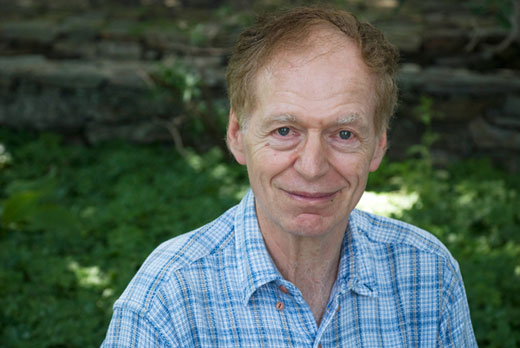
Central to this move to engineer biology, to synthesize life, is Harvard researcher George Church.

"Today I am involved in a number of synthesis and sequencing endeavors," he says. "First, the BioFab group works together on 'constructive biology', which has a number of tightly overlapping parts of a Venn diagram."

"There's IGEM, 'International Genetically Engineered Machines' group, which is now in its fourth year , and has 39 universities involved. It's a very interesting social phenomenon; it involves wiki's and a lot of undergraduates, 39 teams of 10 to 20 people each. It's amazingly intense and enjoyable — kind of like the robot competitions, or the DARPA Grand Challenges. They compete to make cool things during the summer, and some go year-round working on those cool things — engineering life.

"Some of the people who started that group are also part of BioBrick Foundation, a non-profit, and a company called Codon Devices. So the founders of the field are defined by the intersection, or union, of those sets, depending how you look at it.

"BioFab group is also a subset of the Codon Devices scientific advisory board. And that's a Cambridge company that does synthetic biology. We're distinct from IGEM and the BioBrick Foundation and other synthetic biology groups that are emerging. "

Church points out that "almost every new thing is a combination of two old things. This is a kind of a union of engineering design principles that might be familiar to people in large-scale integrated circuits, combining that with genetic engineering, metabolic engineering, both of which are older — decades old, not ancient — and systems biology, which itself is a combination of feedback concepts, differential equations and so forth — those could be incorporated as well. There's also some bringing together of the chemistry and automation to make DNA — large highly accurate pieces of DNA — combining in concepts of laboratory evolution, which is relatively new. These things all meet together — kind of all these streams flowing together suddenly, all at once, into synthetic biology. Enough old things brought together into a new package that it consitutes an invention, a new field."

Unlike typical labs, a BioFab "Lab" can make a copy of itself. "Once you have a really great engineered biology system, you can make as many copies of it as you want: you could scale it up… (it does it itself; it's self-assembling). It's a dream of mechanical, electrical, and chemical Fab Labs — if they ever made, say, a milling machine that could make a copy of itself. That would be great. Then they'd have a self-replicating machine; that would be a milestone."

There are inevitable questions surrounding Church and his colleagues about "playing God" and there are also concerns about the kinds of bio-terror, lab accidents, and Frankenstein-like creations that have informed the writings of such thinkers as Bill Joy and Lord (Martin) Rees. These concerns were addressed by researchers in the field last month at SythenticBiology2.0, the second annual conference in this new field, which was convened at US-Berkeley. According to their Web site, "the SB2.0 community is developing a written statement describing some principles for advancing this new field in a safe and effective way, based on the third day of discussions and here."

—JB

GEORGE CHURCH is Professor of Genetics at Harvard Medical School and Director of the Center for Computational Genetics. His current research focuses on integrating biosystems-modeling with personal genomics & synthetic biology.

George Church's Edge Bio Page 

Quantum Monkeys

[5.23.06]


The image of monkeys typing on typewriters is quite old. . . .Some people ascribe it to Thomas Huxley in his debate with Bishop Wilberforce in 1858, after the appearance of The Origin of Species. From eyewitness reports of that debate it is clear that Wilberforce asked Huxley from which side of his family, his mother's or his father's, he was descended from an ape. Huxley said, "I would rather be descended from a humble ape than from a great gentleman who uses considerable intellectual gifts in the service of falsehood. "A woman in the audience fainted when he said that. They didn't have R-rated movies back then.

Seth Lloyd is an Edgy guy. In fact he likes to work "at the very edge of this information processing revolution". He appeared at the Edge event in honor of Robert Trivers at Harvard and talked from his "experience in building quantum computers, computers where you store bits of information on individual atoms."

Ten years ago Lloyd came up with "the first method for physically constructing a computer in which every quantum—every atom, electron, and photon—inside a system stores and processes information...During this meeting, Craig Venter claimed that we're all so theoretical here that we've never seen actual data. I take that personally, because most of what I do on a day-to-day basis is to try to coax little super-conducting circuits to give up their secrets". Below is his talk along with his discussion with Steven Pinker, Martin Nowak, J. Craig Venter, Lee Smolin, and Alan Guth

SETH LLOYD is Professor of Mechanical Engineering at MIT and a principal investigator at the Research Laboratory of Electronics. His seminal work in the fields of quantum computation and quantum communications—including proposing the first technologically feasible design for a quantum computer.

He is the author of the recently published Programming the Universe: A Quantum Computer Scientist Takes On the Cosmos.

SETH LLOYD'S Edge Bio Page

The Reality ClubSteven PinkerMartin NowakJ. Craig VenterLee SmolinAlan GuthRudy Rucker


THE "GREAT" TRANSITION

[5.7.06]

When we look back after 370 million years of evolution, the invasion of land by fish appears special. However, if we could transport ourselves by time machine to this early period, it isn't clear whether we would notice anything extraordinary. We would see a lot of fish, some of them big and some of them small, all of them struggling to survive and reproduce. Only now, 370 million years later, do we see that one of those fish sat at the base of a huge branch of the tree of life—a branch that includes everything from salamanders to humans. It would have taken an uncanny sixth sense for us to have predicted this outcome when our time machine deposited us in the middle of the Devonian.

Introduction

Evolutionary biologist Neil Shubin writes:

"Within each of us — our skeletons, our behavior, and deep within our DNA — lurks our distant past. Make the relevant comparisons and we find that our hands resemble fossil fish fins, our heads are organized like long-extinct jawless fish, and major parts of our genomes look and function like those of worms and bacteria. We unlock our history as we understand more about our DNA, as we compare ourselves to animals living and dead, and as we discover new fossils from around the world. With all of this history in our bodies, we are most definitely not designed 'intelligently.' Our chances of developing certain cancers, hernias, bad backs, injured knees, and even hiccups are the result of the history that we share with fish, worms, and clams."

"We live in an age of discovery where the classic stories of evolution have become the focus of vigorous new approaches from genetics and developmental biology. Breakthroughs in genetics are beginning to tell us how bodies are built, in essence giving insights into the recipe that builds animals from a single celled egg. Couple these breakthroughs with the remarkable fossil discoveries of the past decade, and we have opportunity to present a new worldview of the human body."

Shubin, a leading researcher in fish-to-tetrapod transition, startled the world on March 31 with the announcement in the journal Science of the discovery of Tiktaalik, ''a mosaic of primitive fish and derived amphibian", which led to global headlines. His moment of realization occurred while digging fish bones out of rocks on a snowy July afternoon.

"While studying 380 million year old rocks in Ellesmere Island, at a latitude of 80 North, I was uncovering one of the key transitional stages in the shift from fish to land living animal. Everybody knows that fish swim with fins and animals that walk on land have legs. I was in the Arctic to learn how this shift happened. The fish I was uncovering had a wrist and fingers. A fish with wrists and fingers? I was immediately struck that this fossil reveals a very deep branch of my evolutionary tree. This is the origin of my wrists and fingers. Huddled in the tent during prolonged Arctic storms, it occurred to me that 3.5 billion years in the history of life are embedded in my own body."

Shubin's essay, "The 'Great' Transition", was written after the discovery but prior to the March 31 announcement. It is excerpted from Intelligent Thought: Science Versus the Intelligent Design Movement.

JB

NEIL SHUBIN, an evolutionary biologist, has been one of the major forces behind a new evolutionary synthesis of expeditionary paleontology, developmental genetics, and genomics. He is chair of the Department of Organismal Biology and Anatomy at the University of Chicago. 

Neil Shubin's Edge Bio Page

BIOCOMPUTATION

[6.27.05]

J. Craig Venter


Ray Kurzweil


Rodney Brooks


Introduction

One aspect of our culture that is no longer open to question is that the most significant developments in the sciences today (i.e. those that affect the lives of everybody on the planet) are about, informed by, or implemented through advances in software and computation. In no other field is this as evident as in the biology and, in this regard, each of the panelists in this Edge conversation exemplifies this new trend.

For example, just as this edition of Edge goes to "press," today's Wall Street Journal ran a front page story on Craig Venter's goal of creating life itself. Venter is one of leading scientists of the 21st century for his visionary contributions in genomic research. He is advancing the science of genomics and in applying genomic advances to some of the world’s most vexing public health and environmental challenges. Major research foci include human genomic medicine, environmental and evolutionary genomics (which includes the Venter Institute Global Sampling Mission), biological energy production, synthetic biology, and the intersection between genomics and environmental and energy policy.

ROCKVILLE, Md. -- Biologist J. Craig Venter once raced the U.S. government to complete the decoding of the human genome. Now, after a maverick career studying the code of life, Dr. Venter has a new goal: life itself.

Along with two veteran collaborators, Dr. Venter hopes to become the first to whip up a made-to-order bacterium. Normally, new life is created via reproduction, with each generation passing its genes on to the next. But Dr. Venter aims to bypass that process by manufacturing a complete set of genes, or genome, of a single-cell bacterium in his laboratory. This man-made genome would be installed inside a bacterium whose own genes have been removed.

By creating such a life form, Dr. Venter's researchers think they may come closer to understanding what life is and how scientists can manipulate it for the benefit of humankind. New artificial species could open avenues for industrial production of drugs, chemicals or clean energy.

"This is the step we have all been talking about. We're moving from reading the genetic code to writing it," Dr. Venter says, swiveling in his chair at his sprawling scientific headquarters here.

(Antonio Regaldo, "Next Dream for Venter: Create Entire Set of Genes From Scratch", The Wall Street Journal, June 29, 2005; Page A1)

Rod Brooks' midlife research crisis has been to move away from looking at humanoid robots and toward looking at the very simple question of what makes something alive — what the organizing principles are that go on inside living systems. In his lab at MIT, his is trying to build robots that have properties of living systems that robots haven't had before.

Brooks is puzzled that "we've got all these biological metaphors that we're playing around with — artificial immunology systems, building robots that appear lifelike — but none of them come close to real biological systems in robustness and in performance. They look a little like it, but they're not really like biological systems." He worries that in looking at biological systems we are missing something that is already there — that has always been there. To Brooks, this might be called "the essence of life," but he is talking about a biochemical phenomenon, not a metaphysical one. Brooks is searching for a new conceptual framework that, like computation, does not involve any new physics or chemistry — a framework that gives us a different way of thinking about the stuff that's there. "We see the biological systems, we see how they operate," he says, "but we don't have the right explanatory modes to explain what's going on and therefore we can't reproduce all these sorts of biological processes. That to me right now is the deep question."

Ray Kurzweil believes "we are entering a new era. Some of us call it the Singularity. It's a merger between human intelligence and machine intelligence which is going to create something bigger than itself. It's the cutting edge of evolution on our planet. One can make a strong case that it's actually the cutting edge of the evolution of intelligence in general, because there's no indication that it has occurred anywhere else. To me that is what human civilization is all about. It is part of our destiny, and part of the destiny of evolution, to continue to progress ever faster and to grow the power of intelligence exponentially."

In this Edge Reality Club conversation, three of the world's leading scientists ask each other the questions they are asking themselves about biocomputation.

Take research and experimentation down an empirical road road and you come to a wall where everything changes, and you blow all your epistemological biases and need new language, new ideas, new paradigms. This is the intersection of the empirical and the epistemological...where Edge likes to hang out.

This live Edge event was presented on February 23rd, hosted by the TED Conference (Technology, Entertainment, Design) in Monterey California. [ED NOTE: TED Global takes place in Oxford, England July 12-15. Craig Venter is among many Edge regulars who are speaking).

I am pleased to present J. Craig Venter, Ray Kurzweil, and Rodney Brooks on "Biocomputation".

-JB


BIOCOMPUTATION

Topic: 

  • LIFE
http://vimeo.com/80933799

"...we're starting to look at the world in terms of gene space instead of genomes and species, and this gets us down to component analysis." -J. Craig Venter

"We just heard some very exciting applications which are in the early stage, moving on from the general project where we essentially collected the machine language of biology and we're now trying to disassemble and reverse engineer it. "- Ray Kurzweil

THE NATURE OF NORMAL HUMAN VARIETY

[3.13.05]
Of course, there will be people who object. There will be people who will say that this is a revival of racial science. Perhaps so. I would argue, however, that even if this is a revival of racial science, we should engage in it for it does not follow that it is a revival of racist science. Indeed, I would argue, that it is just the opposite.
 

Introduction

In the early '90s, I was visiting Cambridge and went out to dinner with the late Stephen Jay Gould. During a long evening of conversation we talked about his ideas concerning race, racial racial differences, racial equality, including his well-known writings on the use and misuse of IQ tests and other such measures. I came away from the conversation with the distinct sense that he believed there were some things better left unsaid, some areas of investigation that were out of bounds if he wanted to have a just society. Nothing strange here. His views were, and still are, consistent with the daily fare of the editorial pages of many of our important newspapers and magazines.

Armand Leroi, a biologist at Imperial College, feels differently. He loves what he calls "the problem of normal human variety".

"Almost uniquely among modern scientific problems, he says, "it is a problem that we can apprehend as we walk down the street. We live in an age now where the deepest scientific problems are buried away from our immediate perception. They concern the origin of the universe. They concern the relationships of subatomic particles. They concern the nature and structure of the human genome. Nobody can see these things without large bits of expensive equipment. But when I consider the problem of human variety I feel as Aristotle must have felt when he first walked down to the shore at Lesvos for the first time. The world is new again. What is more, it is a problem that we can now solve, a question we can now answer. And I think we should. 

"Of course, there will be people who object. There will be people who will say that this is a revival of racial science". Leroi argues that "there will always be people who wish to construct socially unjust theories about racial differences. And though it is true that science can be bent to evil ends, it is more often the case that injustice creeps in through the cracks of our ignorance than anything else. It is to finally close off those cracks that we should be studying the genetic basis of human variety."

-JB

ARMAND LEROI is a Reader in Evolutionary Developmental Biology at Imperial College, London. He is the author of Mutants: On Genetic Variety and the Human Body, winner of The Guardian First Book Award, 2004.

ARMAND LEROI 's Edge Bio Page

THE REALITY CLUB: James J. ODonnell, Andrew Brown, Tim D. White, Alun Anderson, Nicholas Humphrey respond to Armand Leroi

THE NATURE OF NORMAL HUMAN VARIETY

Topic: 

  • LIFE
http://vimeo.com/80936126

"Of course, there will be people who object. There will be people who will say that this is a revival of racial science. Perhaps so. I would argue, however, that even if this is a revival of racial science, we should engage in it for it does not follow that it is a revival of racist science. Indeed, I would argue, that it is just the opposite."

INDIRECT RECIPROCITY, ASSESSMENT HARDWIRING, AND REPUTATION

[12.5.04]

These ideas fed into our work on indirect reciprocity, a concept that was first introduced by Robert Trivers in a famous paper in the 1970s. I recall that he mentioned this idea obliquely when he wrote about something he called "general altruism". Here you give something back not to the person to whom you owe something, but to somebody else in society. He pointed out that this also works with regard to cooperation at a high level. Trivers didn't go into details, because at the time it was not really at the center of his thinking. He was mostly interested in animal behavior, and so far indirect reciprocity has not been proven to exist in animal behavior. It might exist in some cases, but ethologists are still debating the pros and cons.

In human societies, however, indirect reciprocity has a very striking effect. There is a famous anecdote about the American baseball player Yogi Berra, who said something to the effect of, "I make a point of going to other people's funerals because otherwise they won't come to mine." This is not as nonsensical as it seems. If a colleague of the university, for instance, goes faithfully to every faculty member's funeral, then the faculty will turn out strongly at his. Others reciprocate. It works. We think instinctively in terms of direct reciprocation — when I do something for you, you do something for me — but the same principle can apply in situations of indirect reciprocity. I do something for you and somebody else helps me in return.

Introduction by John Brockman

In an essay published in Nature ("Prisoners of the dilemma: When mathematics and biology met on a mountain", February 2004), Austrian mathematical biologist Martin Nowak, Director of The Program for Evolutionary Dynamics at Harvard, wrote about his relationship with his fellow Austrian, the mathematician Karl Sigmund:

"Once a year the theoretical chemist Peter Schuster used to take his students from the University of Vienna to a small house in the Austrian mountains. During the day we skied, of course, but in the evening the emphasis was on science. I was a first-year PhD student looking for a project. The mathematician Karl Sigmund was there and gave a talk on what was a new topic for him: the prisoner's dilemma. At the end of the talk I asked a question, and the next day we traveled back to Vienna, endlessly debating this game. In subsequent days, I visited Karl's office and we started to do calculations. We had become prisoners of the dilemma."

"We often met in coffee houses, the genius loci of past glory. Here Kurt Goedel announced his incompleteness theorem, Ludwig Boltzmann worked on entropy, and Ludwig Wittgenstein challenged the Vienna circle. Or we walked in the Vienna forest, visiting a meadow called 'Himmel' (Heaven), where a sign noted that here Sigmund Freud first understood the nature of dreams.

"Within a year, we had conceived an evolutionary description of probabilistic strategies in the prisoner's dilemma struggling for cooperation by natural selection The prevailing paradigm, tit-for-tat, an unforgiving retaliator, was replaced by generous tit-for-tat (which always cooperates when the other person has cooperated and sometimes even when the other person has defected) and later by win—stay, lose—shift (which stays with its current choice if the score is above an aspiration level and changes otherwise). A byproduct of this work was adaptive dynamics, representing a new way to look at evolution of strategies in a continuous space.

"My introduction to Karl Sigmund in the Austrian mountains was the turning point that brought together mathematics and biology."

~~~

"I am often thinking about the different ways of cooperating," says Karl Sigmund, Professor of Mathematics at the University of Vienna, "and nowadays I'm mostly thinking about the strange aspects of indirect reciprocity. Right now it turns out that economists are excited about this idea in the context of e-trading and e-commerce. In this case you also have a lot of anonymous interactions, not between the same two people but within a hugely mixed group where you are unlikely ever to meet the same person again. Here the question of trusting the other, the idea of reputation, is particularly important. Google page rankings, the reputation of eBay buyers and sellers, and the Amazon.com reader reviews are all based on trust, and there is a lot of moral hazard inherent in these interactions."

I recently visited with Sigmund in Vienna and we discussed the implications of his ideas on Internet commerce. He became aware of the implications of these ideas for Internet commerce only a short time ago. He does not use eBay, or buy books on Amazon. "It was my students who told me that reputation is now a very interesting issue in this context. When I tried for the nth time to write an introduction to a working paper on the topic of indirect reciprocity, they asked me, "Why are you always looking to hominid evolution, to pre-history, when a similar thing is happening right now on the Internet?"

"Whether or not the pioneers behind Google are aware of these theories coming out of evolutionary biology would be an interesting question to ask", he says. "I have no contact with them, but claim a partial, subliminal credit for the term Google."

"When the Brin family first came to Vienna from Russia, Sergei Brin was 3-years old. The family stayed with us at our apartment for some time. His father, a friend and colleague, is the mathematician Michael Brin, who specializes in ergodic theory and dynamical systems, and that was also my field at that time. The first thing we offered the Brins when they entered our home was a "Guglhupf ", the famous Austrian dessert...which greatly impressed the young Sergei. But I bet he does not remember. Officially, Google comes from googol — a very large number — and the real reason for the name is lost in oblivion."

— JB

A FULL-FORCE STORM WITH GALE WINDS BLOWING

[10.16.04]

For the last ten or fifteen years, I've been trying to understand situations in nature in which the genes within a single individual are in disagreement—or put differently, in which genes within an individual are selected in conflicting directions. It's an enormous topic, which 20 years ago looked like a shadow on the horizon, just as about a hundred years ago what later became relativity theory was just two little shadows on the horizon of physics, and blew up to become major developments. In genetics it's fair to say that about 20 years ago a cloud on the horizon was our knowledge that there were so-called selfish genetic elements in various species that propagated themselves at the expense of the larger organism. What was then just a cloud on the horizon is now a full-force storm with gale winds blowing.

Robert Trivers


For the past several years Edge has hosted an annual end-of-summer event. As a departure, this year's event was organized around the work of one person: the legendary Robert Trivers. It was held in Cambridge, on September 7-8 at The Program for Evolutionary Dynamics at Harvard University.

The event began with a reception and dinner on September 7th for Trivers, a group of Edge regulars, and friends of Nowak's Institute. The following day featured five talks: Robert Trivers began the program with a talk on "New Work on Selfish Genetic Elements", and ended the proceedings with his long-standing ideas on "Deceit and Self-Deception". J. Craig Venter spoke about "Ocean Genomics"; Seth Lloyd on "The Computational Universe"; and Martin Nowak on "The Evolution of Cooperation."

Participants included: Daniel C. Dennett, Alan Dershowitz, Jeffrey Epstein, Nancy Etcoff, Peter Galison, Daniel Gilbert, Alan Guth Marc D. Hauser, Seth Lloyd, Marvin Minsky, Andrew Murray, Martin Nowak, Steven Pinker, Lisa Randall, Lee Smolin, Liz Spelke, Lawrence Summers, Robert Trivers, J. Craig Venter, Dan Wegner, E.O. Wilson.

This online presentation is a reprise of the live program in Cambridge with an added introduction, comments on the work of Trivers by Steven Pinker, and a talk with Trivers in July which inspired the program. Edge plans to publish the edited talks, video clips, and discussions over the next few months along with Reality Club discussions among speakers, participants, and the wider Edge community. The line-up is as follows:

Introduction by John Brockman (below)
Steven Pinker on Robert Trivers (below)
Robert Trivers: "A FULL-FORCE STORM WITH GALE WINDS BLOWING" (below)
Robert Trivers: "NEW WORK ON SELFISH GENETIC ELEMENTS" (to come)
J. Craig Venter: "OCEAN GENOMICS " (to come)
Seth Lloyd: "THE COMPUTATIONAL UNIVERSE" (to come)
Martin Nowak: "THE EVOLUTION OF COOPERATION" (to come)
Robert Trivers: "DECEIT AND SELF-DECEPTION" (to come) 


We are devoted to researching every possible application of Mathematics and Computer Science to Biology. At the center of a quantitative approach to biology is evolutionary theory as pioneered by Charles Darwin. Concepts of evolutionary biology can be formulated in terms of mathematical equations describing mutation and selection of replicating individuals. We have active research projects on the evolutionary dynamics of infectious agents, cancer cells, altruistic behavior, and human language.

The Program for Evolutionary Dynamics was established in 2003 by Harvard University President Lawrence H. Summers following an imaginative proposal by Jeffrey Epstein and Benedict Gross. The center operates under the auspices of William Kirby, Dean of the Faculty of Arts and Sciences. Martin Nowak, Professor of Mathematics and Biology, is the Faculty Director.


ROBERT TRIVERS: An Edge Special Event — Co-hosted by The Program for Evolutionary Dynamics at Harvard University, Martin Nowak, Director

Introduction 

Thirty years ago, Robert Trivers disappeared.

My connection to him is goes back to the 1970s. He had left Harvard and was roaming around Santa Cruz when I was introduced to him in a telephone call by our mutual friend Huey P. Newton, Chairman of The Black Panther Party. Huey put Robert on the phone and we had a conversation in which he introduced me to his ideas. I recall noting at the time the power and energy of his intellect. Huey, excited by Robert's ideas on deceit and self-deception, was eager for the three of us to get together.

We never had the meeting. Huey met a very bad end. I lost track of Robert. Over the years there were rumors about a series of breakdowns; he was in Jamaica; in jail.

He fell off the map.

But during his thirty year disappearance, the influence of his ideas has grown and transcended the purely scientific arena. And through all his ups and downs, he never stopped working on his theories.

Several weeks ago, I traveled to Vienna to visit with the mathematician Karl Sigmund, Martin Nowak's early advisor, long-time colleague, and collaborator. Karl and I talked about theories of indirect reciprocity, generous reciprocity, reputation, and assessment, and the relevance of these concepts in our everyday lives.

"Where did you come up with these ideas?" I asked Karl.

"In the early 70s," he said. "I read a famous paper by Robert Trivers, one of five he wrote as a graduate student at Harvard, in which the idea of indirect reciprocity was mentioned obliquely. He spoke of generalized altruism, where you are giving back something not to the person you owed it to but to somebody else in society. This sentence suggested the possibility that generosity may be a consideration of how altruism works in evolutionary biology."

Karl went on to explain how evolutionary concepts of indirect reciprocity, generous reciprocity, reputation assessment, cooperation, evolutionary dynamics—all inspired by Trivers' early paper—are very much in play in all our lives: in Google's page rankings; in amazon.com's reader reviews; in the reputations of eBay buyers and sellers, and even in the good standing of a nonprofit web site such as Edge (for example, type the word "edge" in the Google search box, you arrive at this web site).

In fact, Trivers' influence is in evidence in the name chosen for Nowak's Program of Evolutionary Dynamics at Harvard as "evolutionary dynamics" is but the latest conceptual iteration suggested in the sentence he wrote thirty years ago.

In recent years, Trivers has been most comfortable living in a no-signals region where he could anonymously pursue his research agenda.

"For the last ten or fifteen years," he says, "I've been trying to understand situations in nature in which the genes within a single individual are in disagreement—or put differently, in which genes within an individual are selected in conflicting directions. It's an enormous topic, which 20 years ago looked like a shadow on the horizon, just as about a hundred years ago what later became relativity theory was just two little shadows on the horizon of physics, and blew up to become major developments. In genetics it's fair to say that about 20 years ago a cloud on the horizon was our knowledge that there were so-called selfish genetic elements in various species that propagated themselves at the expense of the larger organism. What was then just a cloud on the horizon is now a full-force storm with gale winds blowing."

Trivers has returned.

JB

STEVEN PINKER ON ROBERT TRIVERS


I'm very pleased to hear that Edge is having an event highlighting the work of Robert Trivers on deceit and self-deception. I consider Trivers one of the great thinkers in the history of Western thought. It would not be too much of an exaggeration to say that he has provided a scientific explanation for the human condition: the intricately complicated and endlessly fascinating relationships that bind us to one another.

In an astonishing burst of creative brilliance, Trivers wrote a series of papers in the early 1970s that explained each of the five major kinds of human relationships: male with female, parent with child, sibling with sibling, acquaintance with acquaintance, and a person with himself or herself. In the first three cases Trivers pointed out that the partial overlap of genetic interests between individuals should, according to evolutionary biology, put them in a conflict of psychological interest as well. The love of parents, siblings, and spouses should be deep and powerful but not unmeasured, and there should be circumstances in which their interests diverge and the result is psychological conflict. In the fourth case Trivers pointed out that cooperation between nonrelatives can arise only if they are outfitted with certain cognitive abilities (an ability to recognize individuals and remember what they have done) and certain emotions (guilt, shame, gratitude, sympathy, trust)—the core of the moral sense. In the fifth case Trivers pointed out that all of us have a motive to portray ourselves as more honorable than we really are, and that since the best liar is the one who believes his own lies, the mind should be "designed" by natural selection to deceive itself.

These theories have inspired an astonishing amount of research and commentary in psychology and biology—the fields of sociobiology, evolutionary psychology, Darwinian social science, and behavioral ecology are in large part attempt to test and flesh out Trivers' ideas. It is no coincidence that Richard Dawkins' The Selfish Gene were published in  1976, just a few years after Trivers' seminal papers. Dawkins openly acknowledged that they were popularizing Trivers' ideas and the research they spawned. Likewise for the much-talked-about books on evolutionary psychology in the 1990s—The Adapted Mind, The Red Queen, Born to Rebel, The Origin of Virtue, The Moral Animal, and my own How the Mind Works. Each of these books is based in large part on Trivers' ideas and the explosion of research they inspired (involving dozens of animal species, mathematical and computer modeling, and human social and cognitive psychology).

But Trivers' ideas are, if such a thing is possible, even more important than the countless experiments and field studies they kicked off. They belong in the category of ideas that are obvious once they are explained, yet eluded great minds for ages; simple enough to be stated in a few words, yet with implications we are only beginning to work out.

The point that partial genetic overlap among individuals leads to partial conflicts of interests in their motives explains why human life is so endlessly fascinating – why we love, and why we bicker with those we love; why we depend on one another, and why a part of us mistrusts the people we depend on; why we know so much about ourselves, but can't see ourselves as others see us; why brilliant people do stupid things and evil men are convinced of their rectitude. Trivers has explained why our social and mental lives are more interesting than those of bugs and frogs and why novelists, psychotherapists, and philosophers (in the old sense of wise commentators on the human condition) will always have something to write about.

Trivers is an under-appreciated genius. Social psychology should be based on his theory, but the textbooks barely acknowledge him. Even in his own field he has been overshadowed in the public eye by those who have popularized his ideas. An Edge event with other leading third culture thinkers focusing on his work will be a major contribution, and begin to give this great mind the acknowledgement it deserves.

Steven Pinker
Johnstone Family Professor
Department of Psychology
Harvard University


Pages

Subscribe to RSS - LIFE