LIFE

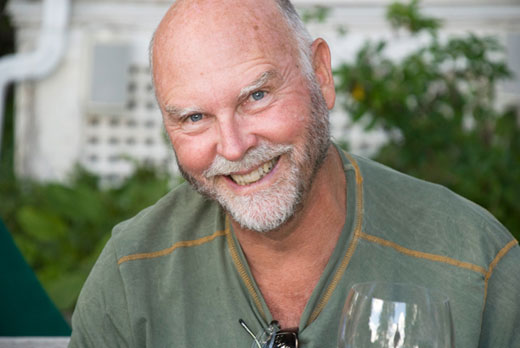
Craig Venter—LIFE: WHAT A CONCEPT!

An Edge Special Event at Eastover Farm
[8.27.07]

"Life/ Consists of propositions about life." — Wallace Stevens("Men Made out of Words")

I have come to think of life in much more a gene-centric view than even a genome-centric view, although it kind of oscillates.  And when we talk about the transplant work, genome-centric becomes more important than gene-centric. From the first third of the Sorcerer II expedition we discovered roughly 6 million new genes that has doubled the number in the public databases when we put them in a few months ago, and in 2008 we are likely to double that entire number again.  We're just at the tip of the iceberg of what the divergence is on this planet. We are in a linear phase of gene discovery maybe in a linear phase of unique biological entities if you call those species, discovery, and I think eventually we can have databases that represent the gene repertoire of our planet.

One question is, can we extrapolate back from this data set to describe the most recent common ancestor. I don't necessarily buy that there is a single ancestor. It’s counterintuitive to me. I think we may have thousands of recent common ancestors and they are not necessarily so common.

J. CRAIG VENTER is one of leading scientists of the 21st century for his visionary contributions in genomic research. He is founder and president of the J. Craig Venter Institute. The Venter Institute conducts basic research that advances the science of genomics; specializes inhuman genome based medicine, infectious disease, environmental genomics and synthetic genomics and synthetic life, and explores the ethical and policy implications of genomic discoveries and advances.   The Venter Institute employes more than 400 scientist and staff in Rockville, Md and in La Jolla, Ca.  He is the author of A Life Decoded: My Genome: My Life.

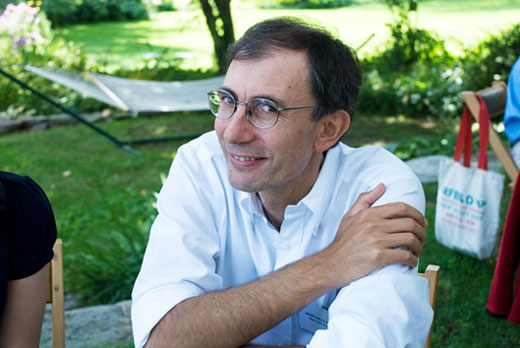
Seth Lloyd—LIFE: WHAT A CONCEPT!

An Edge Special Event at Eastover Farm
[8.27.07]

"Life/ Consists of propositions about life." — Wallace Stevens("Men Made out of Words")

If you program a computer at random, it will start producing other computers, other ways of computing, other more complicated, composite ways of computing. And here is where life shows up. Because the universe is already computing from the very beginning when it starts, starting from the Big Bang, as soon as elementary particles show up. Then it starts exploring — I'm sorry to have to use anthropomorphic language about this, I'm not imputing any kind of actual intent to the universe as a whole, but I have to use it for this to describe it — it starts to explore other ways of computing.

SETH LLOYD is Professor of Mechanical Engineering at MIT and Director of the W.M. Keck Center for Extreme Quantum Information Theory (xQIT). He works on problems having to do with information and complex systems from the very small — how do atoms process information, how can you make them compute, to the very large — how does society process information? And how can we understand society in terms of its ability to process information? He is the author of Programming the Universe: A Quantum Computer Scientist Takes On the Cosmos.

CHANGING ONE SPECIES TO ANOTHER

[7.30.07]

In a news cycle dominated by Paris Hilton and the Apple iPhone, Craig Venter has announced the results of his lab's work on genome transplantation methods that allows for the transformation of one type of bacteria into another, dictated by the transplanted chromosome. In other words, one species becomes another. This is news, bound to affect everyone on the planet. Below is the press release fromVenter's Institute, along with links to the scientific paper published in Science, and the international press.

The day after the announcement, Edge talked to Venter, who had the following to say about the research underway:

Now we know we can boot up a chromosome system. It doesn't matter if the DNA is chemically made in a cell or made in a test tube. Until this development, if you made a synthetic chomosome you had the question of what do you do with it. Replacing the chomosome with existing cells, if it works, seems the most effective to way to replace one already in an existing cell systems. We didn't know if it would work or not. Now we do. This is a major advance in the field of synthetic genomics. We now know we can create a synthetic organism. It's not a question of 'if', or 'how', but 'when', and in this regard, think weeks and months, not years.


JCVI Scientists Publish First Bacterial Genome Transplantation Changing One Species to Another
Research is important step in further advancing field of synthetic genomics

ROCKVILLE, MD — June 28, 2007 — Researchers at the J. Craig Venter Institute (JCVI) today announced the results of work on genome transplantation methods allowing them to transform one type of bacteria into another type dictated by the transplanted chromosome. The work, published online in the journal Science, by JCVI’s Carole Lartigue, Ph.D. and colleagues, outlines the methods and techniques used to change one bacterial species, Mycoplasma capricolum into another, Mycoplasma mycoides Large Colony (LC), by replacing one organism’s genome with the other one’s genome.

“The successful completion of this research is important because it is one of the key proof of principles in synthetic genomics that will allow us to realize the ultimate goal of creating a synthetic organism,” said J. Craig Venter, Ph.D., president and chairman, JCVI. "


Published Online June 28, 2007
Science DOI: 10.1126/science.1144622
Science Express Index
Research Articles
Submitted on May 3, 2007
Accepted on June 21, 2007

Genome Transplantation in Bacteria: Changing One Species to Another
Carole Lartigue 1, John I. Glass 1*, Nina Alperovich 1, Rembert Pieper 1, Prashanth P. Parmar 1, Clyde A. Hutchison III 1, Hamilton O. Smith 1, J. Craig Venter
The J. Craig Venter Institute, Rockville, MD 20850, USA.

As a step toward propagation of synthetic genomes, we completely replaced the genome of a bacterial cell with one from another species by transplanting a whole genome as naked DNA. Intact genomic DNA from Mycoplasma mycoides large colony (LC), virtually free of protein, was transplanted into Mycoplasma capricolum cells by polyethylene glycol-mediated transformation. Cells selected for tetracycline resistance, carried by the M. mycoides LC chromosome, contain the complete donor genome and are free of detectable recipient genomic sequences. These cells that result from genome transplantation are phenotypically identical to the M. mycoides LC donor strain as judged by several criteria. ... [subscription]

THE CRAWFOORD PRIZE IN BIOSCIENCES 2007

[7.18.07]

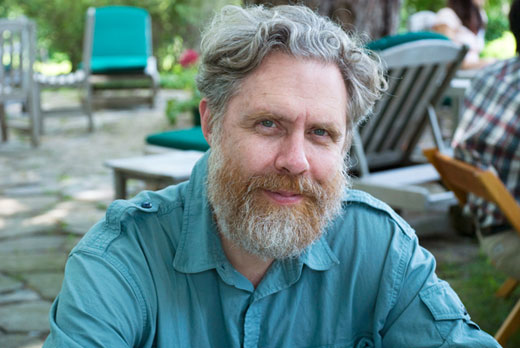
The Royal Swedish Academy of Sciences has awarded the annual $500,000 Crafoord Prize in Biosciences for 2007 to Robert L. Trivers, Rutgers University, "for his fundamental analysis of social evolution, conflict and cooperation".

His pioneering ideas on the evolution of the social behaviour of animals form the basis of much of sociobiology and its research on how cooperation and conflict arise in the animal world.

Robert Shapiro—LIFE: WHAT A CONCEPT!

An Edge Special Event at Eastover Farm
[5.9.07]

"Life/ Consists of propositions about life." — Wallace Stevens("Men Made out of Words")

I looked at the papers published on the origin of life and decided that it was absurd that the thought of nature of its own volition putting together a DNA or an RNA molecule was unbelievable.

I'm always running out of metaphors to try and explain what the difficulty is. But suppose you took Scrabble sets, or any word game sets, blocks with letters, containing every language on Earth, and you heap them together and you then took a scoop and you scooped into that heap, and you flung it out on the lawn there, and the letters fell into a line which contained the words “To be or not to be, that is the question,” that is roughly the odds of an RNA molecule, given no feedback — and there would be no feedback, because it wouldn't be functional until it attained a certain length and could copy itself — appearing on the Earth.

ROBERT SHAPIRO is professor emeritus of chemistry and senior research scientist at New York University. He has written four books for the general public: Life Beyond Earth (with Gerald Feinberg); Origins, a Skeptic's Guide to the Creation of Life on Earth; The Human Blueprint (on the effort to read the human genome); and Planetary Dreams (on the search for life in our Solar System).

E. O. WILSON: TED PRIZE WISH: HELP BUILD THE ENCYCLOPEDIA OF LIFE

[5.7.07]

Those of us in Monterey this year watched in awe as E O Wilson unveiled his inspiring TED Prize wish to create an Encyclopedia of Life. (If you weren't there, you can see it at the link above). As E.O. Wilson accepts his 2007 TED Prize, he makes a plea on behalf of his constituents, the insects and small creatures, to learn more about our biosphere. We know so little about nature, he says, that we're still discovering tiny organisms indispensable to life; yet we're still steadily destroying nature. Wilson identifies five grave threats to biodiversity (a term he coined), using the acronym HIPPO, and makes his TED wish: that we will work together on the Encyclopedia of Life, a web-based compendium of data from scientists and amateurs on every aspect of the biosphere.

In Washington DC this morning, the first big step in that dream came true. Five major scientific institutions, backed by a $50m funding commitment led by the MacArthur Foundation, announced the launch of a global effort to launch the Encyclopedia. Ed Wilson described today's announcement as a dream come true.

THE ENCYCLOPEDIA OF LIFE

IMAGINE an electronic for each species of organism on earth available everywhere by single access on command.
[5.7.07]

May 8, 2007
E.O. WILSON: TED PRIZE WISH: HELP BUILD THE ENCYCLOPEDIA OF LIFE

Chris Anderson, TED Curator

Those of us in Monterey this year watched in awe as E O Wilson unveiled his inspiring TED Prize wish to create an Encyclopedia of Life. (If you weren't there, you can see it at the link above). As E.O. Wilson accepts his 2007 TED Prize, he makes a plea on behalf of his constituents, the insects and small creatures, to learn more about our biosphere. We know so little about nature, he says, that we're still discovering tiny organisms indispensable to life; yet we're still steadily destroying nature. Wilson identifies five grave threats to biodiversity (a term he coined), using the acronym HIPPO, and makes his TED wish: that we will work together on the Encyclopedia of Life, a web-based compendium of data from scientists and amateurs on every aspect of the biosphere.

In Washington DC this morning, the first big step in that dream came true. Five major scientific institutions, backed by a $50m funding commitment led by the MacArthur Foundation, announced the launch of a global effort to launch the Encyclopedia. Ed Wilson described today's announcement as a dream come true.

Pages

Subscribe to RSS - LIFE