Conversation: Serpentine Gallery ~ Edge: Map Marathon
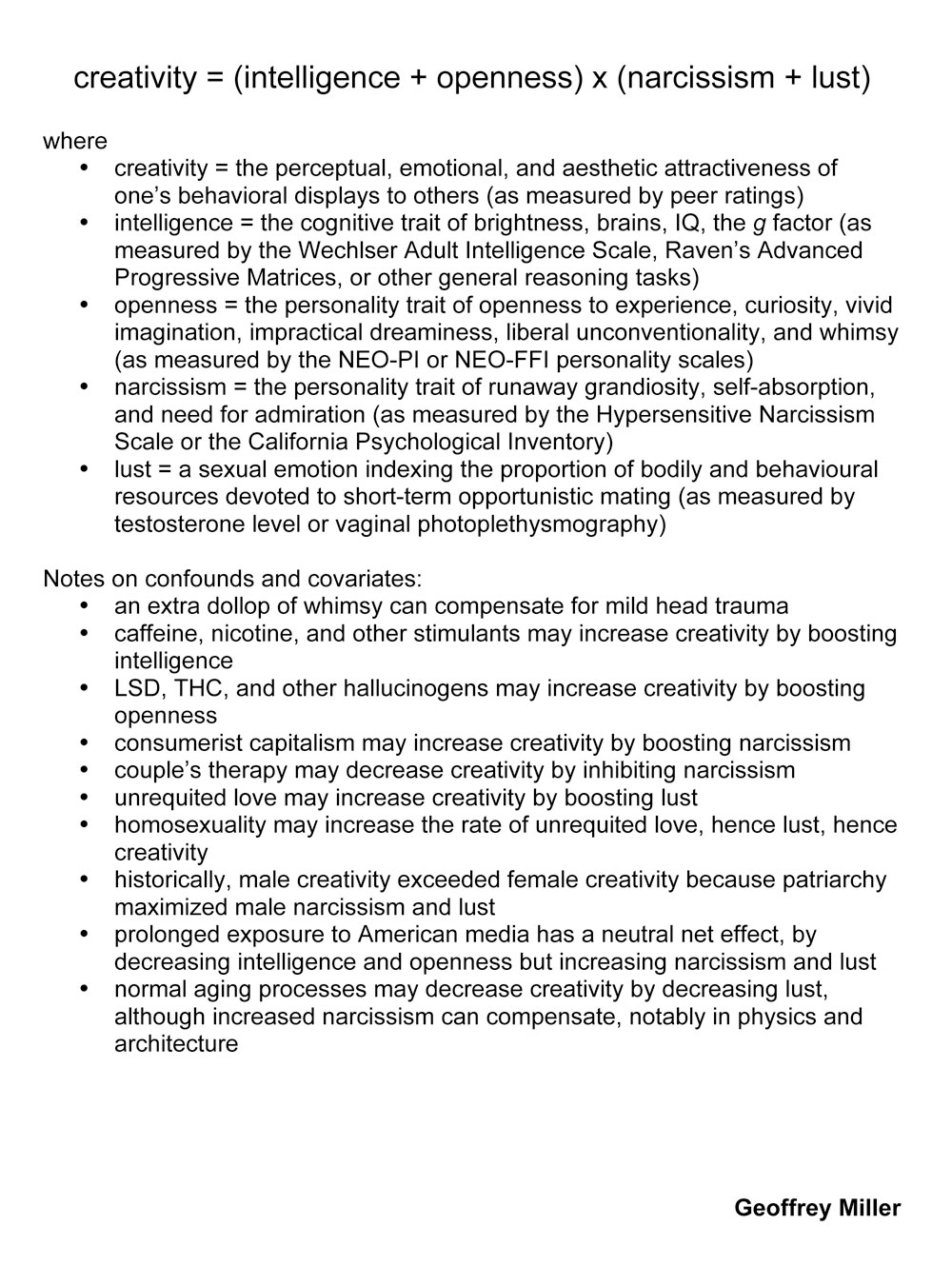
?(top) Spinoza’s most fundamental affects are pain, pleasure and desire. They lie beneath all the other affects and can be thought of as closer to organic conditions than psychic ones. The more complex emotions bear an indirect link to the three just named.??(bottom) The Market's Expectation of Future Uncertainty in a Stochastic Volatility Model
A temperature map of the Universe 400,000 years after the Big Bang.This was the end of thermal equilibrium and the beginning of all we see now.
?These maps illustrate my vision of "The New North" - eight countries and surrounding seas in the planet's northern quarter of latitude - that will enter a period of rising biological productivity and global strategic value in the 21st century. The New North will emerge as a new geographic and economic region alongside the more familiar Global North ("Core") and Global South ("Periphery") in the next few decades. The first map shows "The Northern Rim" as viewed from North America, and includes population density, human infrastructure, anticipated resource deposits, and a quiltwork of overlapping political claims to the Arctic Ocean seafloor. The second map illustrates the onslaught of shipping that invades the Arctic each summer, as the seasonal sea ice retreats. In the 21st century, with sea ice expected to disappear completely in summer, such human activity will only intensify.
A map of the world economy, and a road map to industrial development. This poster is based on research Laszlo Barabasi and I published in SCIENCE in 2007 and were done in collaboration between my group at MIT and the Center for International Development, at Harvard.
Examples of my map paintings - these are of the Grand Canyon, the bronze is from my "Lakes' series ?Clockwise from left: Bright Angel 2001 132" x 48" ink & oil paint on canva; Obi Canyon - 2001 66"x 48" ink and oil paint on canvas; Bright Night 2001 132" x 48" ink & oil paint on canvas; Edison Lake - 1976 cast bronze
Chart of the Alaska Peninsula and North Pacific Ocean, ca. 1770, by Russian navigator Vasilii Fedorovich Lovtsov. Note that the correct positions of Kodiak Island and the Shumagin Islands have been transposed. During this exploratory period a condition for being licensed to harvest furs in Russian America was to submit charts of the new territory to the Russian crown. I believe the islands were deliberately misplaced to lead competitors astray. What deceptions similar to this 18th-century misrepresentation await us among the data being mapped in the 21st? (courtesy Provincial Archives of British Columbia)
An expected value map that my laboratory generated in 2005, in 2 and 3 dimensions. The map illustrates brain regions whose activity (or oxygen utilization) increases proportional to the amount of money people anticipate making (and combines data from fourteen subjects). From a neuroscience standpoint, it is interesting to note that these regions overlap the ascending projection areas of midbrain dopamine neurons. Researchers are now using activity in some of these regions to predict subjects' upcoming choices (e.g., in investment or shopping scenarios).